
Director: Joe Begos.
Starring: Dora Madison, Tru Collins, Rhys Wakefield.
Runtime: 1 hr 20 mins
Release Date: 27 September 2019 (USA).
Rating: 18.
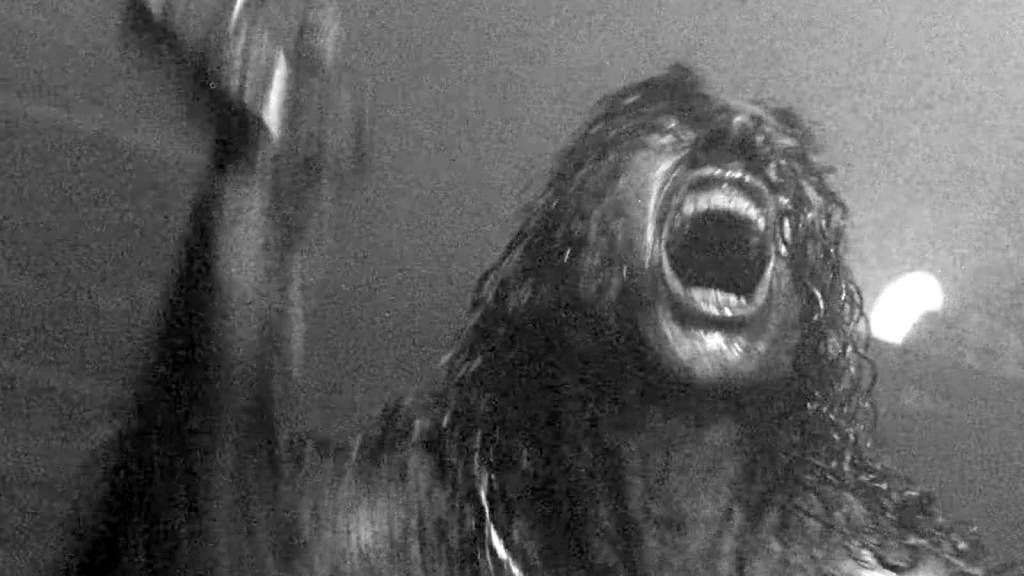
Joe Begos’ BLISS is a neon-drenched frenzy of sex, drugs and vampires, supported by a killer soundtrack and a strong lead performance, with no intention of letting you catch your breath until the final bloody scene.
Dora Madison (The Honor Farm and VFW) plays Dezzy, a Los Angeles artist struggling with her latest painting. She can’t bring herself to make a mark on the canvas, her landlord is chasing her for rent money, and, after Dez asks for an extension to get the painting finished, her agent drops her from his roster. Close to broke and desperate for a distraction, Dez pays a visit to her drug-dealer, Hadrian (Graham Skipper).
Hadrian has got the best fucking Bliss in town, a designer blend of cocaine and DMT, aptly called Diablo. Dez comes around from a generous sample of the black powder a few hours later to find herself in the middle of a house party, where she runs into Courtney (Tru Collins) and Ronnie (Rhys Wakefield). It doesn’t take much to convince her to stay and a night of excess ensues. Two bottles of liquor, a fist full of Diablo and one vampiric threesome later, the stage is set.
That night acts as a catalyst for the hallucinatory blood-thirst that drags Dezzy through the rest of the film. She has found the inspiration to paint again but how many bodies will she have to drain to finish her masterpiece?
Writer/Director Joe Begos’ blood-soaked tale of psychedelic hedonism is, at times, a nauseating experience – an intentional side-effect, and one that serves as a testament to both the vision of Begos (The Mind’s Eye and Almost Human) as well as the proficiencies of Mike Testin’s cinematography and Josh Ethier’s editing skills. Bliss demands a form of complicity from its audience with a plethora of audiovisual techniques that act to intoxicate those watching; The moment that Dezzy (Dora Madison) takes her first hit of Diablo, we, the viewer, are made to feel like we did too. No matter whether it’s alcohol, drugs, or blood that is altering Dezzy’s state of mind at any given point during the short 80 minute run-time, we are along for the ride. It’s this empathetic illusion, created by Begos and his team, that separates Bliss from other recent horror titles and makes it worth watching.
Madison’s dynamic performance as the struggling artist, Dezzy, cuts through the noise of Bliss and, despite the aforementioned merits of production, is arguably the driving-force of the title. There isn’t a scene that goes by without Dezzy and, considering the demanding nature of the role (full-frontal nudity, excessive drug use, getting covered in blood), Madison manifests the character with an apparently effortless tenacity. As a result, she is able to carry the weight of the film on her shoulders.
Viewers may struggle with the initial characterisation of Dezzy as the unlikable protagonist, cursing at every opportunity without a modicum of empathy, and although this is not helped by the script at times there is a point during the film where it stops being a problem and becomes part of Dezzy’s charm.
There is also a limited supporting cast, almost all of whom portray abrasive and belligerent characters that simultaneously authenticate the underground-metal backdrop and make it difficult for a viewer to care what happens to them. Tru Collins and Rhys Wakefield fill the roles of Courtney and Ronnie respectively and, aside from serving as an unflinching pastiche of The Lost Boys (1987), they work as the seductive force of debauchery keeping Dezzy from making the right decision; Then there’s Clive (Jeremy Gardner), Dezzy’s free-loading boyfriend, who probably didn’t deserve what happened to him. Even Dezzy’s landlord (Mark Beltzman) and her agent (Chris McKenna) are justifiably portrayed as villains in their scenes.
There doesn’t appear to be any redeemable characteristics in the ranks of deadbeats we come across in Bliss, even the trio of old coots playing poker can be written off as fodder from the moment we meet them, and as a result there are no stakes. Maybe that’s the point though?
Shot on 16mm film, giving it that grind-house quality, and drenched in neon, Bliss takes great pleasure in knowing what it is – an onslaught on the senses. It’s loud and fast and disorienting, but it’s beautifully shot and, to Begos’ credit, offers a fresh take on the vampire mythos. Reminiscent of Gaspar Noé’s psychotropic ventures, Climax (2018) and Enter The Void (2009), and taking a bite out of Abel Ferrara’s The Addiction (1995), Bliss manages to create something unique whilst retaining the traditional vampire tropes that audiences would expect from the genre.
Neck-biting and blood-lust to one side, there is a substance to Bliss that puts a bit of weight behind its punches. Begos has managed to instil a confident ambiguity as to whether Dezzy is actually succumbing to vampirism or if she, and the viewer, is experiencing a hallucinatory nightmare caused by the drug that titles the film. It makes room for a thoughtful interpretation of what would otherwise simply be a gory joyride and begs the question – Do you think it was the Bliss or the Blood?
Bliss is an incredibly enjoyable grind-house production that succeeds in breathing new life into familiar vampire tropes. Horror fans of any calibre will be hard pressed to walk away from this film without having been blown away by part of it.
 | Nathan Leigh Taylor | Writer & Creative.